
Jump to content

ELECTRIC SIGN SUPPLIES
If You're Looking For Premium Electric Sign Industry Components From Trim Cap, LED's, Neon Supplies, Power Supplies, Pattern Paper.  Then Please Visit Our Online Store or Feel Free To Call Us For Inquiries or Placing an Order!!
Buy Now

SIGN INSTALLER MAP
Looking for a fellow Sign Syndicate Company Member For A Sign Install or Maintenance Call?
Click Here

For Sign Company's Who Work As Subcontractors
Before You Work For A National Sign & Service Company You Need To Look At The Reviews Of These Companies Before You Work For Them. Learn When To Expect Payment From Them and What It's Like To Work For Them, The Good, The Bad, The Ugly. Learn and Share Your Experiences Yourself For Others

Click Here

Recommended Posts

Posted

Entrepreneurs Sue City of Dallas To Overturn Ban on Window Signs

New Law Part of Growing Trend that Violates First Amendment And Hurts Small Businesses During Economic Downturn

WEB RELEASE: November 10, 2009

Media Contact:

Matt Miller (512) 480-5936

Shira Rawlinson (703) 682-9320

DALLAS—The Texas Chapter of the Institute for Justice today filed a federal suit against the city of Dallas, Texas, for violating the free speech rights of local businesses.

Under the new law enacted in 2008, businesses are prohibited from putting signs in the upper two-thirds of any window or glass door, and no more than 15 percent of any window or glass door may be covered by signs. The only way to comply with the new ordinance is by putting tiny signs at people’s feet—which is not an effective way to advertise. The law also bans signs that cover more than 25 percent of a building’s façade.

The law only targets commercial messages. Businesses are free to put anything except a commercial message in their windows. For example, a business could paint a giant Dallas Cowboys helmet on its window—but not advertise that it offers Cowboys merchandise for sale inside. Businesses can paint their windows black or put coolers or other items in front of them. In fact, businesses are not even required to have windows at all. What they cannot do is put a commercial message in the upper two-thirds of a window or cover more than 15 percent of a window with one.

“You’ll find a sign ordinance in nearly every city in America, but what are new are restrictions on percentages of window space that can be used for signage,” warned Matt Miller, executive director of the Institute for Justice Texas Chapter (IJ-TX), which today filed suit on behalf of Dallas-area entrepreneurs. “These laws have cropped up mostly in the past five years or so. Texas alone has dozens of them and they are spreading like an invasive weed that’s choking the First Amendment freedoms of small businesses. We expect that a victory in the Dallas sign ban case would go a long way to stopping this spread not only in Texas, but nationwide.”

April Gilliland, co-owner of a FASTSIGNS franchise on Central Expressway, has seen the negative effects of the law firsthand. Gilliland said, “I’ve had to tell many business owners that I can’t put a sign in their window, or on their door, because it violates the new Dallas ordinance. People have important information that they want to convey to their customers, and this ordinance stops them from doing that.”

Charlie Patel, owner of Lakeside Cleaners at Knox Avenue and Central Expressway, has likewise been harmed by this law. Dallas made him take down a simple vinyl window sign that advertised “20% Off” dry cleaning. The reason? The sign was in the upper two-thirds of the window and covered more than 15 percent of the window. With the sign gone, all Charlie could do was watch helplessly while customers drove up and then drove immediately away, assuming the special was no longer being offered.

The city’s censorship falls hardest on small businesses for whom retail signs are the most cost-effective way—and often the only way—to reach customers with news about products, services and specials.

Gilliland and Patel are joined by three other Dallas-area entrepreneurs who have been negatively affected by the new law.

Dena McDonald owns a tropical travel agency called Tiki Trips on McKinney Avenue. McDonald’s signs are crucial to her ability to attract business. The bright colors and tropical imagery immediately convey the essence of her business—trips to beautiful destinations. Without them, Tiki Trips would lose the ability to inform passers-by about the services they offer.

Jaine London owns a uniform supply store on Plano Road called TK Scrubs. Dallas cited London and made her remove signs from her windows that told customers that TK Scrubs offers nurses’ uniforms and supplies. Without those signs, London’s business has suffered.

Jeff Youngblood, another FASTSIGNS franchise owner, has joined the litigation in order to stand up for free speech and to protect the rights of his customers to convey simple, truthful messages to people driving or walking past their businesses.

Documents obtained through open records requests by the Institute for Justice Texas Chapter demonstrate that Dallas has primarily targeted enforcement of this law in lower-income areas of town and the businesses that serve them. Outside of a major sweep of Harry Hines Avenue, enforcement has been spotty. In both Charlie Patel’s and Jaine London’s cases, entire shopping centers were targeted while businesses just down the street continue to violate the ordinance and were not cited. Indeed, most businesses in Dallas violate the ordinance today. It is difficult to find any business that does not have any signs in the upper two-thirds of a window, or signs that do not cover more than 15 percent of a window. Façade signage frequently covers more than 25 percent of a given area. Signs like these are an indicator of economic health and vibrancy.

The answer to the problem the city has created, however, is not to enforce this unconstitutional law on all businesses, but rather to do away with the restrictions and allow all businesses to reach out to their customers without the heavy hand of government getting in the way.

Miller said, “Cities wouldn’t dream of telling a newspaper how many pages of advertising they could carry, or telling a television station that they could only advertise during certain hours. Yet they are perfectly happy to ban the basic window signs that small businesses rely on to attract customers.”

Miller concluded, “The First Amendment doesn’t draw a distinction between commercial speech, political speech and artistic speech. Commercial speech is one of the most basic—and important—kinds of speech in our society. It is the lifeline between small businesses and their customers. Dallas has severed that lifeline with this oppressive law. We are asking a federal court to declare the law unconstitutional.”

The Institute for Justice is a nonprofit public interest law firm that advances a rule of law under which individuals can control their destinies as free and responsible members of society.

You have enemies? Good. That means you've stood up for something, sometime in your life. - Winston Churchill

  • !llumenati
Posted

Put a damn forsale sticker on the sign for a million dollars and when the town tells you to take it down sue them for loss of buisness.

Merchandise in a window on display is a phisical sign with no writing on it. According to this law you are legally not allowed to have any window displays as well.

Hang the sign 12" in from the glass, then it is part of the interior, to bad it is faceing the wrong way.

I had a problem like this a long time ago in a town in NY that didnt like illuminated signage. Found out that a town officials brother was a sign painter and couldnt do electric signs

Just venting. :[

GOOD things happen for a reason......


  • Topics

  • Posts

    • I didn't take the job.   And before I did anything for a company like them, I'd have to set up an ach block.   Otherwise, per my banker, it's possible that they can do a reverse ACH.   My bankers has been after me to set that up, though there is a monthly fee.   sigh, there's a monthly fee to just about anything with banks.   Paul, keeping busy i hope?    Rocco
    • Take the Money 1st. ACH the money. Then do the job.  *** Credit Cards can be cancelled up to 18 months ***
    • Wow, you will have to root through "their" protections.
    • A national sign company that I've dealt with for at least twenty-five years wants us to sign their vendor packet again this year.   At first it was a few pages but grew over time.   Last year it was fifteen pages.   Now it's twenty-two pages., plus a three page NDA.   I will have someone look it over and give me their opinion but it's getting ridiculous.    Their paperwork pusher will say that its' all "standard things" but standard for who and in whose favor?   Even if they gave me a ton of work, and it's only been one or two jobs a year recently, I'd be hesitant.   if i didn't know someone that does contacts for a living, I'd have to pay an attorney to go over this packet.    This is a national that has a good rep but it's getting to the point that we all need an attorney on hand at all times to go over paperwork.    Rant over.
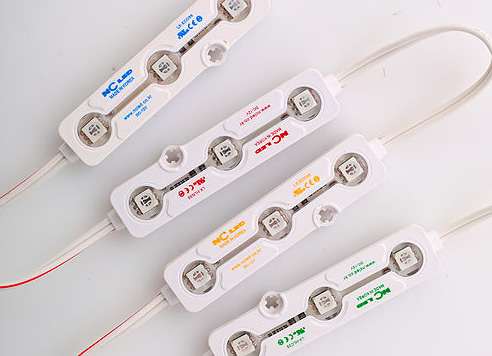
    • This is the late April 2026 Update   This month we added in: GE's TX GEN4 12v .9w 6500K LED Module     G2G's WOW II Red 12V .72W     Also Including the GWH IV Snap Shot of the Project which is also included in the April Evaluation PDF Sheet.   The most important thing to take notice i2 the FC / Watt (Foot Candles per Watt).    This is the LED Chip Quality and Efficiency, this is the amount of Light Per Power.  The bigger the number the more efficient that Light Source is.  You might see a Higher Wattage LED Module with a low FC/Watt value, that means it's not too efficient....could even be pushed and in some cases over driven running hot, which can result in shorter life.   I'm going to drop an example to put things in perspective. Let's take two 2LED Modules...the Brighton - II, and the EveryLite Rebel LED Module.   The Brighton II is .8 watts, the EveryLite Rebel is almost a 1 watt Module at .96w   The 362 Foot Candle average EveryLiteRebel is brighter than the B-II Module at 348.5 FC AVG.  However the B-II Module has a 108.91 Foot Candle Per Watt Average.    So if we were to boost the Module Power of the Brighton - II and make it say, a .84w module instead of a .8w module then we can project the Brighton II Module with Foot Candle per Watt of 108.91 to have a Foot Candle Average of 365.93.   The .84w Brighton - II Module would be brighter, under driven, and more efficient than the .96w EveryLite Rebel.   Now the Flip Side...   If we made the .96w EveryLite Module to a .8w Module apples to apples to the Brighton - II Module, we can project the Foot Candle of the .8watt EveryLite Module would be 301.66 instead of the 362 FC Average.  You can see the Handicap here   So Boosting the power of so-so chips will give you more light for the "Wow" factor, but in some case is over driving, there is more heat involved....and like all electronics...they hate and fail with heat.  This is why a lot of LED MFG's recently make a 2 LED almost 1 watt Module and sell for $40 a bag....   Just something to take note of.....          On another Note, I will be taking down the TBA Vendor as the light is too low, and the Principal / Sloan Prism Module as it is dated   April's 2026 GWH IV Sheet GreatWhiteHope IV 042826 WOA.pdf
×
  • Create New...